wisdom-teeth-removal
Wisdom Teeth Removal
Panoramic & 3D X-ray assessment and simple or surgical extraction of impacted wisdom teeth in Bangkok at COSDENT Smile Design.
Surgical Assessment
Aftercare
Tooth Position

Wisdom teeth (third molars) are the last adult teeth to erupt, typically emerging between ages 17 and 25 when the jawbone has already reached its adult size. Because modern jaws often lack the space for an extra set of molars at the back of the arch, wisdom teeth frequently become impacted, growing at an angle against the neighbouring second molar, remaining trapped beneath the gum flap, or staying encased inside the jawbone. At COSDENT Smile Design in Bangkok, wisdom teeth removal is planned with digital panoramic and 3D CBCT imaging and performed with gentle local anaesthesia and surgical precision at our Siam and Rama 9 clinics.
Whether you have acute gum swelling behind your back molar, need impacted wisdom teeth cleared before orthodontic braces or aligners, or want a preventive check, this guide explains impaction types, the extraction procedure, recovery care, and flight timing for international visitors.
Table of contents
Why wisdom teeth become impacted and cause problems
Types of wisdom tooth impaction
Simple extraction vs surgical wisdom tooth removal
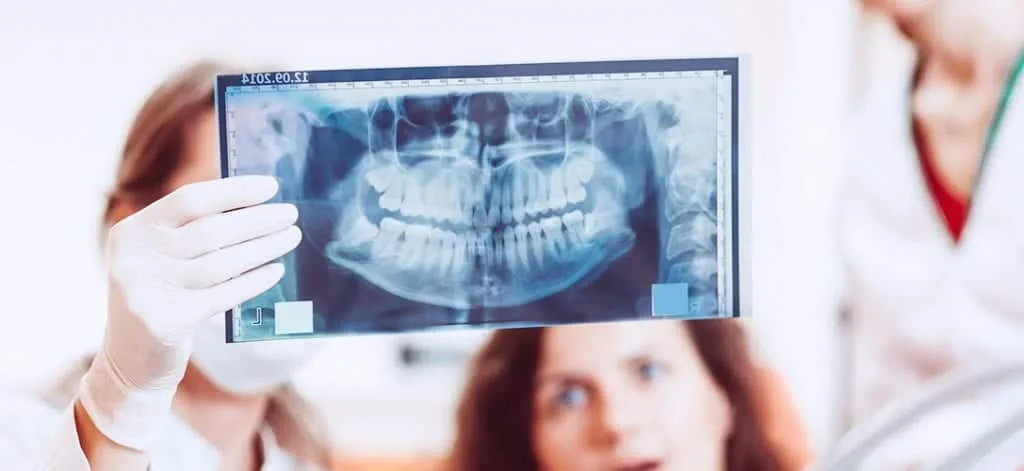
Panoramic X-ray & 3D CBCT nerve assessment before surgery
Step-by-step wisdom tooth removal procedure at COSDENT
Day-by-day recovery guide & preventing dry socket
Travel, flying and pricing considerations in Bangkok
Frequently asked questions
Why wisdom teeth become impacted and cause problems
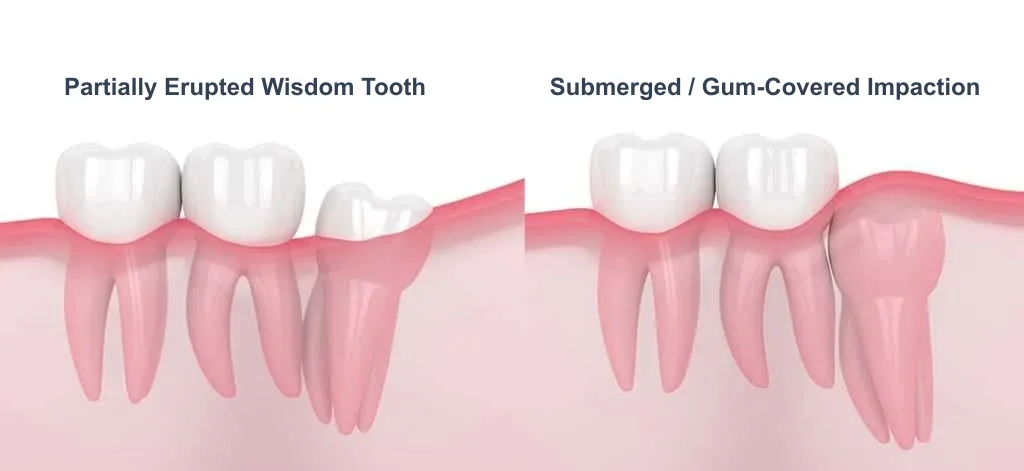
Not every wisdom tooth requires removal, if a third molar erupts completely upright, bites cleanly against its opposing tooth, and can be brushed and flossed all the way around, your dentist may simply monitor it at routine dental check-ups. However, removal is commonly recommended when examination and X-rays show:
Pericoronitis (Recurrent gum flap infection): When a wisdom tooth breaks only halfway through the gum, a pocket-like flap of soft tissue (an operculum) sits over the chewing surface, trapping food particles and bacteria where a toothbrush cannot reach, causing painful swelling, bad taste, and difficulty opening the jaw fully.
Decay or root resorption on the neighbouring second molar: A wisdom tooth tilted forward (mesioangular impaction) presses directly against the back root or crown of the healthy second molar, creating a food trap that often causes deep hidden decay in both teeth.
Orthodontic & prosthetic preparation: Removing obstructing third molars before starting Invisalign, Damon braces, or placing posterior dental implants.
Follicular cysts or bone pathology: Fluid-filled sacs that can occasionally form around the crown of an unerupted impacted tooth inside the jawbone.
Types of wisdom tooth impaction
Your dentist classifies a wisdom tooth by both its angle (vertical, mesioangular/tilted forward, distoangular/tilted backward, or horizontal/lying 90 degrees sideways) and the tissue covering it:
Fully erupted: The crown is entirely above the gumline (often treatable with a straightforward extraction).
Soft-tissue / partially erupted impaction: The crown has cleared the bone but remains partially or fully covered by thick gum tissue.
Partial or full bony impaction: The wisdom tooth remains partially or completely encased within the jawbone, requiring a surgical approach to uncover and section the tooth into smaller pieces so it can be removed through a small window with minimal bone pressure.
Simple extraction vs surgical wisdom tooth removal
Clinical Factor | Simple Wisdom Tooth Extraction | Surgical Impaction Removal |
|---|---|---|
Tooth position | Fully erupted above the gumline with straight, accessible roots | Partially erupted, horizontal/angled, or covered by gum and jawbone |
Procedure technique | Gentle loosening with an elevator and removal with dental forceps | Small gum reflection, conservative bone window & sectioning tooth into segments |
Sutures (stitches) | Often not needed, or 1 simple stabilizing suture | Sutures placed to support gum healing; reviewed/removed after 7 days |
Typical procedure time | ~15 – 30 minutes (including numbing) | ~30 – 60 minutes per tooth depending on root depth and angle |
Peak swelling window | Mild tenderness for 1–3 days | Swelling peaks at 48–72 hours, then subsides over 5–7 days |
Panoramic X-ray & 3D CBCT nerve assessment before surgery
In the lower jaw, the roots of deep wisdom teeth can sit close to the inferior alveolar nerve canal (which supplies sensation to the lower lip and chin) and the lingual nerve. In the upper jaw, wisdom tooth roots sit near the maxillary sinus floor. At COSDENT, we take a digital panoramic X-ray before any extraction, and if the roots overlap or touch the nerve canal on the 2D film, we use 3D Cone Beam CT (CBCT) imaging to map the exact 3D relationship in millimetres so the surgical approach protects the nerve safely.
Step-by-step wisdom tooth removal procedure at COSDENT
Clinical & X-ray review: Confirming the tooth angle, root shape, nerve proximity, and your medical history (including any blood-thinning medications).
Complete local anaesthesia: Topical numbing gel is applied first, followed by a profound local anaesthetic block. We test numbness thoroughly before starting, you will feel dull pressure or movement, not sharp pain.
Conservative removal (and tooth sectioning when impacted): Rather than pulling forcefully against the bone, an impacted tooth is divided into 2 or 3 small segments so each piece lifts out gently through a smaller opening.
Socket irrigation & sutures: The socket is rinsed clean with sterile saline, fine sutures are placed when indicated, and you bite gently on a sterile gauze pack to form a stable blood clot.
Day-by-day recovery guide & preventing dry socket
The single most important goal during the first 72 hours after extraction is protecting the blood clot inside the socket so bone and gum tissue can heal smoothly (preventing alveolar osteitis / dry socket):
First 24 hours: Bite firmly but gently on the gauze pack for 30 to 45 minutes. Apply an ice pack wrapped in a cloth to the outside of your cheek (15 minutes on, 15 minutes off) to minimize swelling. Do not spit forcefully, do not drink through a straw, do not smoke or vape, and do not rinse vigorously, suction can dislodge the blood clot.
Days 2 to 5: Swelling after surgical extraction normally peaks on Day 2 or Day 3 before improving. Switch to warm saltwater rinses after meals starting 24 hours post-op (let the water fall gently from your mouth into the sink rather than spitting hard). Eat cool or lukewarm soft foods (congee, mashed potatoes, yogurt, scrambled eggs, tofu) on the opposite side.
Day 7 review: Return to COSDENT for a quick healing check and suture removal.
Travel, flying and pricing considerations in Bangkok
If you are visiting Bangkok from abroad: a simple erupted extraction requires only 2 to 3 days of local recovery, whereas for a surgical impacted lower wisdom tooth extraction we recommend allowing 5 to 7 days in Bangkok before a long-haul flight so initial swelling settles and sutures can be checked. Fees depend on whether the tooth is a simple extraction, soft-tissue impaction, or partial/full bony impaction, confirmed clearly after your X-ray before any procedure begins. Check our pricing page for fee ranges.
Frequently asked questions
Can I have wisdom tooth removal on the same day if I am in pain?
We welcome urgent wisdom tooth assessments at our Siam and Rama 9 clinics. If the gum around the tooth is mildly inflamed, extraction can often proceed at the same visit after X-rays. If there is a severe acute spreading infection or severe trismus (inability to open the mouth), your dentist may prescribe antibiotics, anti-inflammatory medication, and local irrigation for a few days first so the anaesthetic works effectively and surgery is safer.
Should I remove one wisdom tooth or both on the same side at once?
When both the upper and lower wisdom teeth on the same side need removal, patients often choose to remove both during the same appointment under one local anaesthetic block, so the other side of the mouth remains free for chewing and you only go through one recovery week.
When should I contact the clinic after an extraction?
Contact COSDENT promptly if you experience heavy bleeding that does not slow after biting on fresh gauze for 30 minutes, throbbing pain that worsens sharply after Day 3–4 (a sign of dry socket), fever, pus discharge, or persistent numbness after the local anaesthetic window has passed.
How do I book a wisdom tooth X-ray and consultation at COSDENT?
Contact COSDENT Smile Design via WhatsApp, LINE, phone, or our online form to arrange an assessment in Bangkok.
Extraction complexity, need for 3D CBCT imaging, recovery timeline and exact fees are confirmed after an in-clinic radiographic examination.
Frequently Asked Questions
Everything you need to know about your treatment at COSDENT in Bangkok.
How long do veneers last?
Ceramic veneers can last 15 to 20 years. With good care, many last beyond 20 years. These are realistic ranges, not guarantees. Lifespan depends heavily on how well you care for them and whether you attend regular check-ups.
What to do if a veneer chips or cracks?
Small chips on composite veneers can often be repaired in a single visit. For ceramic veneers, a replacement is typically needed, and the process is straightforward and your original records are kept on file at COSDENT. Contact us and we'll assess from photos before you travel back.
What to do if a veneer comes off completely?
Keep the veneer safe and do not throw it away. In many cases it can be re-bonded. Avoid eating on that side and contact your dentist promptly. This is uncommon with well-bonded veneers, but if it happens, it's a quick fix when handled early.
What to do when you're abroad and something feels off?
COSDENT provides remote aftercare support for international patients. Send us a photo via Whatsapp or online consultation so our team will advise whether it needs immediate attention or can wait until your next visit. You're never left without support after leaving Bangkok.
Can I complete treatment in a single trip to Bangkok?
Some treatments may fit one trip, while others need healing or staged visits. COSDENT confirms the sequence and review needs after assessment.
How do I pay as an international patient?
Payment methods and any available promotions can change. Ask COSDENT to confirm the current options and terms before booking.
How is treatment suitability confirmed?
Suitability, risks, timing and the final fee are confirmed by the treating dentist after reviewing your examination and any necessary records.

Dental Veneers
Dental Veneers in Bangkok at COSDENT—natural smile design with Porcelain Veneers, clear pricing & expert care. Book your consultation today.
Teeth Whitening
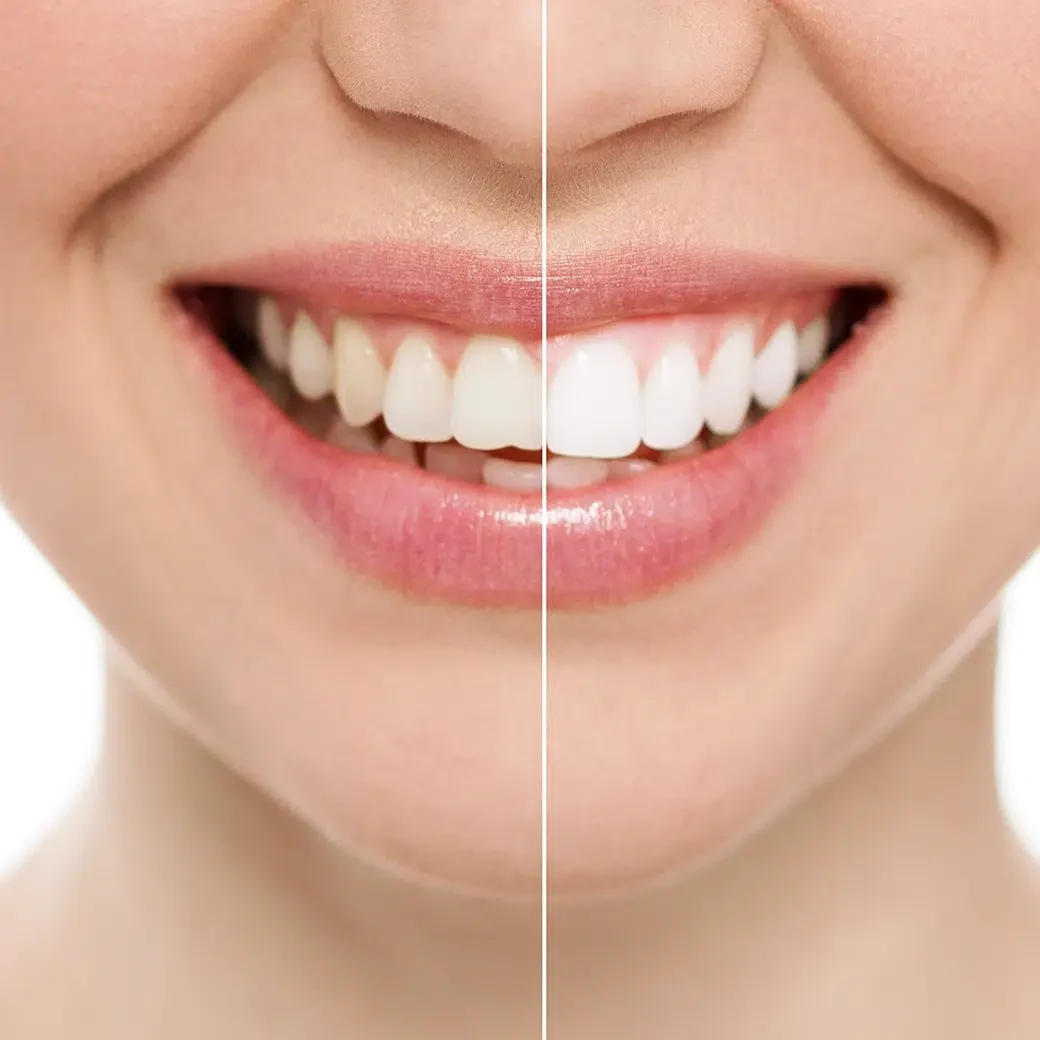
Professional teeth whitening in Bangkok at COSDENT. Flash Whitening Laser — up to 8 shades brighter in 1 minute per tooth. Er:YAG Fotona technology, first in Thailand. Book your consultation today.
Pink Gum Treatment
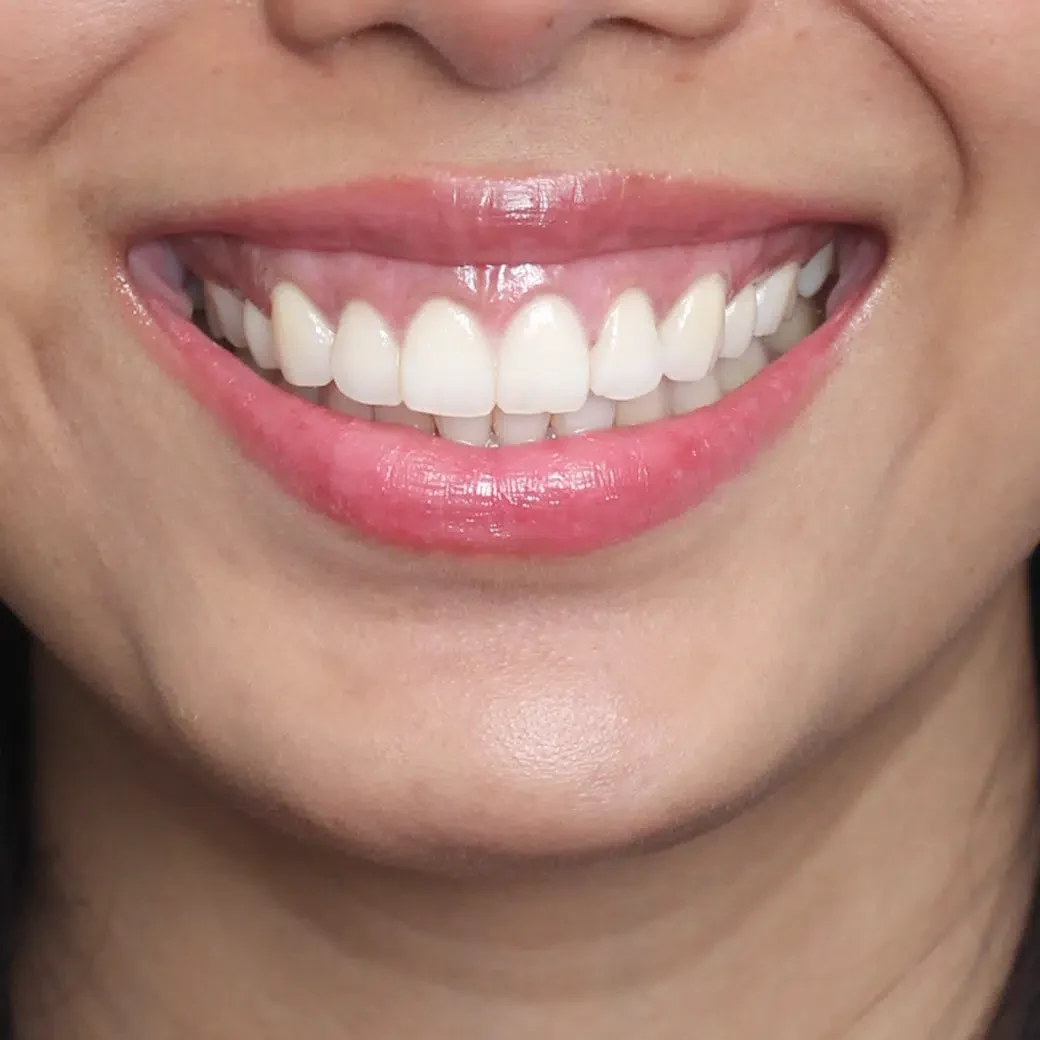
Laser treatment to lighten dark gums for a healthy pink appearance.

