dental-veneer
Dental Veneers
Dental Veneers in Bangkok at COSDENT—natural smile design with Porcelain Veneers, clear pricing & expert care. Book your consultation today.
Smile Design
E-max Ceramic
Natural Look

Your smile is the first thing people notice — and the last thing you should worry about. At COSDENT, we believe every smile has its own story. Ours is crafting yours with precision, care, and an eye for natural beauty.
Considering dental veneers in Bangkok? This guide covers everything you need to make a confident, informed decision — from how veneers work and what materials to choose, to understanding the full treatment process, realistic costs in Bangkok, and how veneers compare to other options like crowns or teeth whitening.
4,000+ veneer cases · Asia Award-winning clinic · 10+ years expertise · 3 branches in Bangkok
Table of contents
What are dental veneers?
Types of veneers: Ceramic vs composite
How a veneer actually works — step-by-step procedure
Things to consider before getting dental veneers
Dental veneer costs in Bangkok
Aftercare & maintenance
FAQ
Dental Veneer Guarantee
Case Review
What are dental veneers?
Dental veneers are ultra-thin shells of ceramic or composite resin, custom-crafted to bond securely to the front surface of your tooth. They cover whatever you’d like to change: the colour, the shape, the length, or small gaps between teeth. Everything behind it stays exactly as it is.
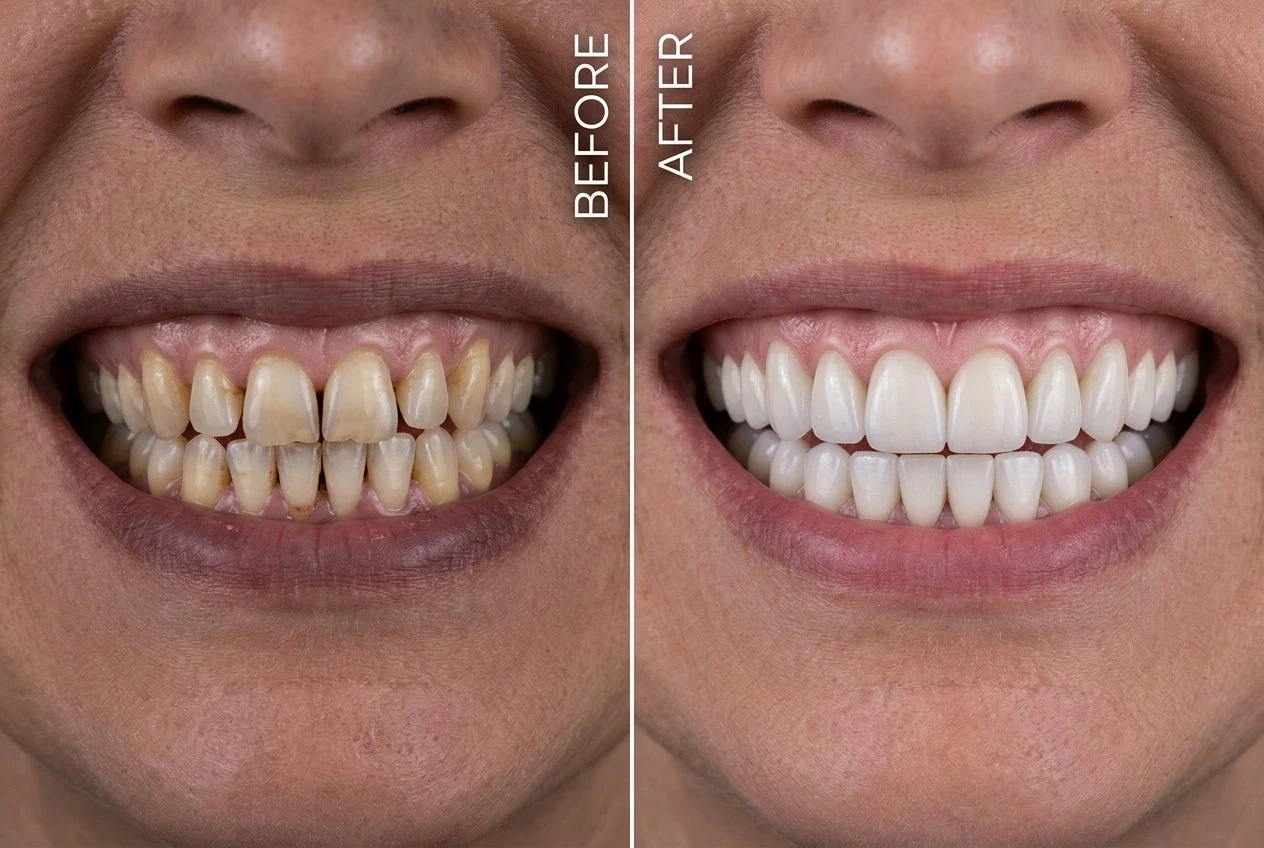
Types of veneers at COSDENT
Ceramic / Porcelain Veneer (Signature & Standard)
Highlight: translucency mimicking natural enamel, stain-resistant, 10–15 year lifespan. Position “Ceramic Signature” as the premium tier — crafted in COSDENT’s in-house lab with enhanced customisation.
Composite Veneer
Same-day option, more affordable, ideal for patients wanting to preview a new smile shape before committing. Be honest about lifespan (4–5 years) — this builds trust.
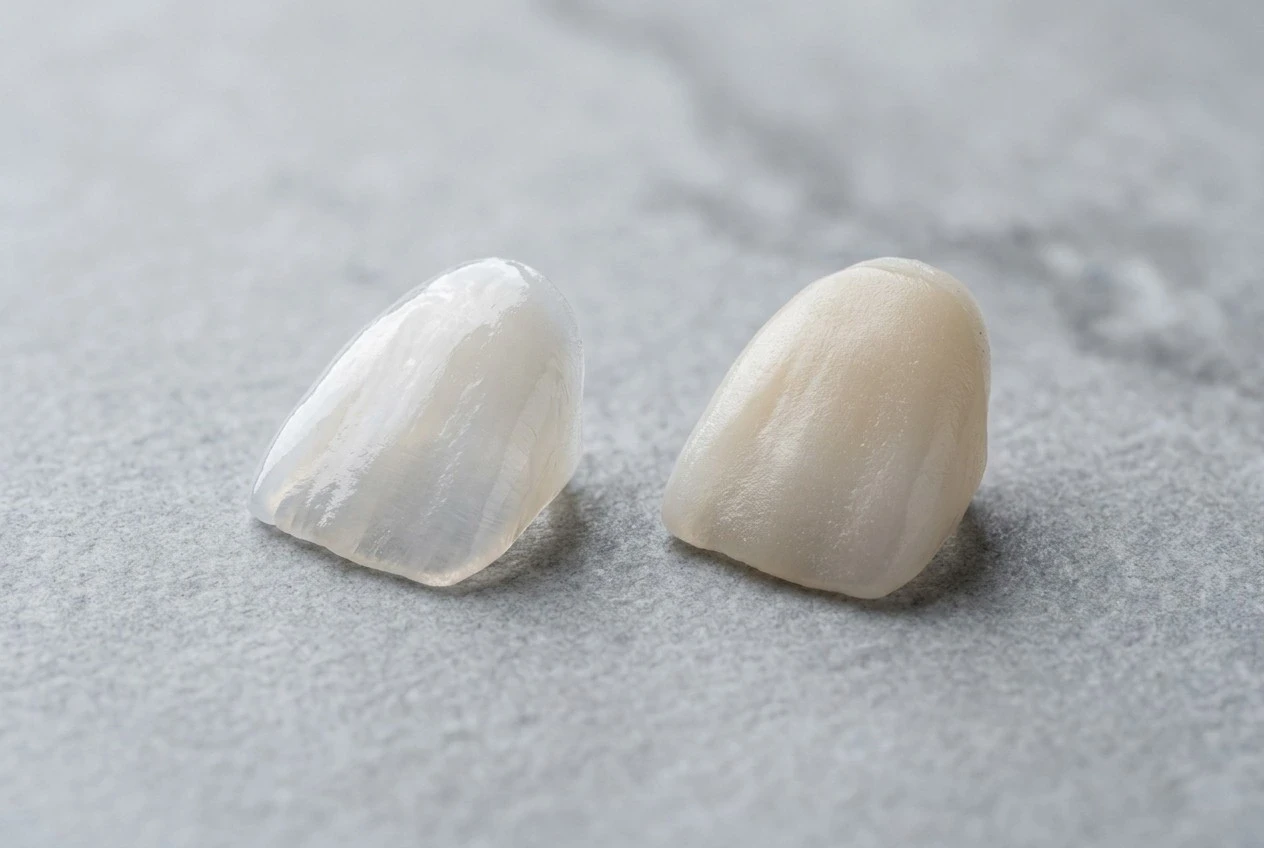
Ceramic vs Composite Comparison
Feature | Ceramic (Porcelain) | Composite |
|---|---|---|
Material | High-grade ceramic / E-max | Composite resin |
Lifespan | 10–15 years | 4–5 years |
Stain resistance | Highly stain-resistant | Moderate stain resistance |
Number of visits | 2–3 visits | 1 visit (same-day) |
Price range | THB 16,000 – THB 18,000 / tooth | THB 5,000 / tooth |
How a veneer actually works — step-by-step procedure
The process is more precise than most people expect. Each step is designed so the final result fits exactly — in size, shade, and bite — before anything is finalised.
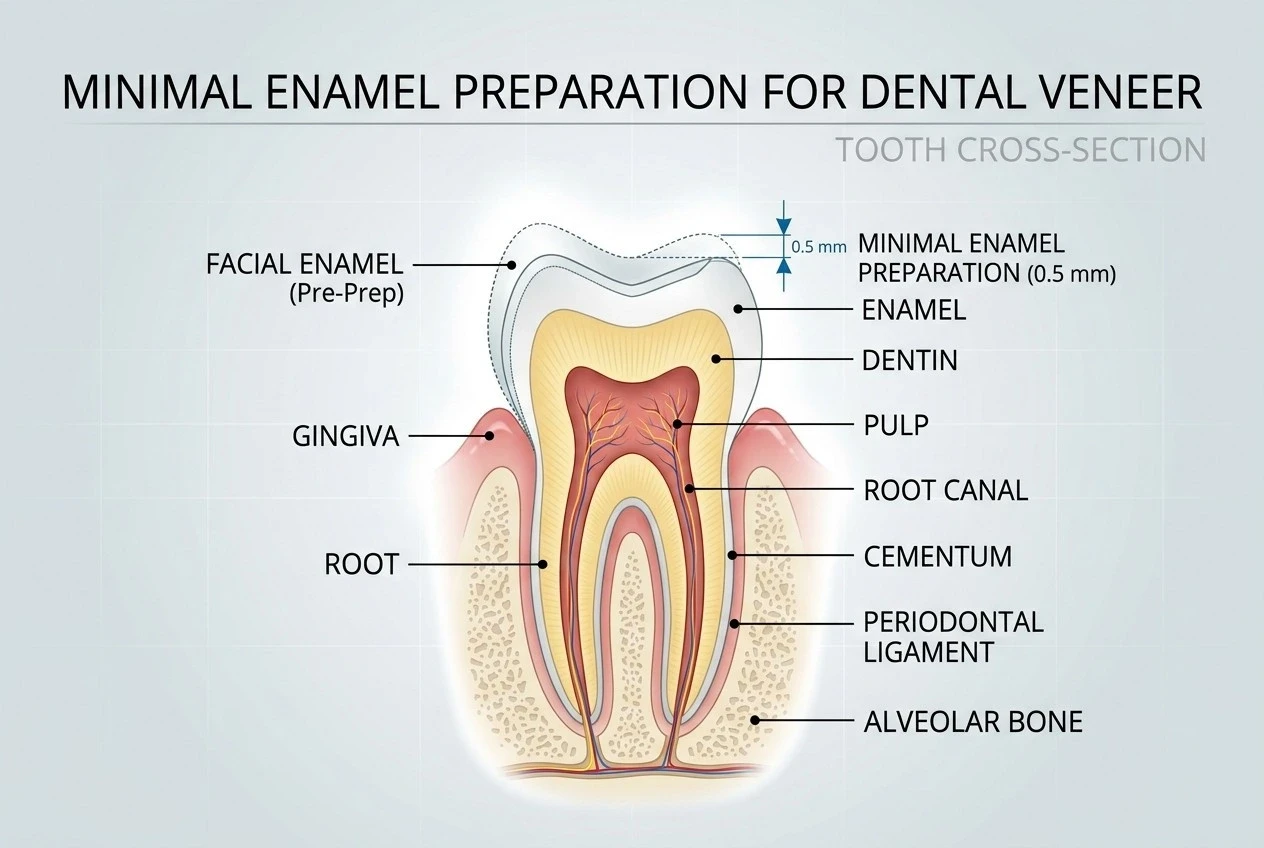
1. Preparing the tooth surface
A very thin layer of enamel is gently removed from the front of the tooth — just enough to make space for the veneer to sit flush. Without this step, the veneer would sit proud of your other teeth and look noticeably bulky. This is why the procedure is irreversible: once enamel is removed, it doesn’t grow back.
2. Taking a precise impression
A digital scan (or impression) captures the exact shape of your prepared teeth. This goes to the dental lab, where each veneer is custom-made to fit your tooth specifically — not sized from a template.
3. Temporary veneers while you wait
You won’t leave the clinic with bare, prepared teeth. Temporary veneers are placed straight away — giving you a preview of your new smile shape while the final veneers are being crafted. This is also a useful checkpoint: if anything about the shape or length feels off, it can be adjusted before the final veneers are made.
4. Bonding — the final bonding step
The tooth surface is treated with a mild etching agent that opens up thousands of tiny pores in the enamel. A bonding agent fills those pores, then the veneer is seated using a resin cement. A curing light activates the cement in seconds — creating a bond that’s both chemical and physical. Once cured, the veneer and tooth function as a single unit.
5. Final check and polish
Your bite is checked from every angle. Any micro-adjustments are made, and the surface is polished to its final finish. You leave with a smile that functions exactly like your natural teeth — just the version of them you actually wanted.

Things to consider before getting dental veneers
Veneers are one of the most effective ways to transform a smile — but they work best when you go in with a clear picture of what the process involves. Here’s what every patient should understand before making the decision.
Veneer thickness: 0.3 – 0.7 mm
Thinner than a contact lens at the lower end. Thin enough to bond seamlessly, strong enough to withstand daily biting force.
How much enamel is actually removed?
Between 0.5 and 1.0 mm — roughly the same thickness as the veneer itself. To put that in context, a human hair is about 0.07 mm wide. The amount removed is precise, minimal, and controlled. It’s not the aggressive grinding that the word “preparation” might suggest.
Coverage area: front face only
From where the gum meets the tooth, down to the biting edge. The back and sides of your tooth stay completely untouched.
How does it bond?
With resin cement + light cure. A dual-action bond — chemical adhesion from the cement, mechanical adhesion from the etched enamel pores. Together, they remain securely bonded.
Does it weaken the tooth?
No — because the veneer immediately replaces what was removed. Once bonded, the veneer and the remaining enamel act as a single unit, restoring the tooth’s surface strength. Studies consistently show that correctly bonded ceramic veneers do not compromise tooth integrity over time.
Will my teeth feel sensitive afterwards?
Some patients notice mild sensitivity to hot and cold for a few days after preparation — this is normal and temporary. Once the final veneers are bonded, sensitivity typically resolves completely. Patients with existing sensitivity are assessed beforehand, and temporary veneers placed between appointments help protect the prepared teeth in the meantime.
Can I ever go back to my natural teeth?
This is the part to understand clearly: veneer preparation is irreversible. Because a thin layer of enamel is irreversibly removed, your teeth will always need to be covered — whether with the original veneers or replacements down the line. This isn’t a reason to avoid veneers; it’s a reason to choose a dentist who plans the treatment carefully and explains exactly what you’re committing to before any work begins.
At COSDENT, we walk through this with every patient before any preparation begins — including showing you a digital preview of your smile design first. The decision to proceed should always feel informed, not rushed. If veneers aren’t the right fit for your teeth or your concerns, we’ll tell you — and we’ll tell you what is.
Dental veneer costs in Bangkok
Getting veneers in Bangkok means access to premium cosmetic dentistry at a price point that’s simply not possible in most Western countries. Here’s exactly what COSDENT charges — with no hidden fees.
COSDENT veneer pricing
Type | Description | Price per tooth |
|---|---|---|
Ceramic Veneer Signature — Most popular | Hand-finished in COSDENT’s in-house lab. Highest translucency and longevity. | THB 18,000 / tooth |
Ceramic Veneer | Premium ceramic quality at a more accessible price point. | THB 16,000 / tooth |
Composite Veneer | Same-day option. Ideal for a preview before committing to ceramic. | THB 5,000 / tooth |
Temporary Veneer | Placed between preparation and final fitting — protects your teeth and previews your result. | THB 2,000 / tooth |
Ceramic Veneer Revision Repair | For patients correcting or replacing existing veneers done elsewhere. | THB 20,000 – 22,000 / tooth |
How does Bangkok compare? (Price per tooth — international average)
The comparison below is based on Ceramic Veneer Signature at THB 18,000/tooth — COSDENT’s premium ceramic option, hand-finished in-house for the highest translucency and longevity.
Location | Price per tooth | Approx. in THB | Comparison |
|---|---|---|---|
Bangkok • COSDENT | THB 18,000 / ~$495 USD | THB 18,000 | Base |
United Kingdom | avg. £700 – £1,500 | ~THB 50,000+ | 2–3x higher |
United States | avg. $1,200 – $2,500 | ~THB 65,000+ | 3–6x higher |
Australia | avg. A$1,500 – $2,800 | ~THB 60,000+ | 3–5x higher |
What you save — full smile (16 veneers at THB 18,000/tooth)
Full smile — 16 veneers at COSDENT: THB 288,000 (approximately $7,900 – $8,100 USD)
Country | Estimated cost abroad (16 veneers) | In THB | You save |
|---|---|---|---|
United Kingdom | £11,200 – £24,000 | THB 500,000 – THB 1,100,000 | THB 212,000 – THB 812,000+ |
United States | $19,200 – $40,000 | THB 700,000 – THB 1,450,000 | THB 412,000 – THB 1,162,000+ |
Australia | A$24,000 – $44,800 | THB 580,000 – THB 1,080,000 | THB 292,000 – THB 792,000+ |
Aftercare & maintenance
Looking after dental veneers doesn’t require a complicated new routine. In most ways, it’s exactly the same as caring for natural teeth — just with a little extra awareness of a few habits that can shorten their lifespan. Most COSDENT patients settle into their veneer care within the first week without thinking twice about it.
Daily care routine
Brush twice a day — Use a soft-bristled toothbrush and non-abrasive toothpaste. Whitening toothpastes with coarse particles can gradually dull the veneer surface — your dentist can recommend a suitable alternative.
Floss daily — Gently floss around the gumline of each veneer. Healthy gums are what keep veneers looking their best long-term — this step matters more than most people expect.
Rinse with mouthwash — A non-alcoholic mouthwash is preferred — high-alcohol formulas can weaken the bonding resin at the veneer edge over time. A gentle daily rinse is all you need.
Wear a night guard if needed — If you grind your teeth at night (bruxism), a custom night guard is strongly recommended. Grinding is one of the most common causes of veneer wear — and one of the most preventable.
Be mindful of the following
Very hard foods — Ice, hard candy, nutshells — biting down with direct force on the veneer edge can chip it.
Staining drinks — Coffee, red wine, tea — ceramic veneers are stain-resistant but the bonding resin at the edges can discolour over time.
Using teeth as tools — Opening packaging, biting nails, or holding objects — habits that put side pressure on veneers.
Smoking — Affects both the veneer surface and the gum health underneath — both matter for long-term appearance.
Frequently Asked Questions
Everything you need to know about your treatment at COSDENT in Bangkok.
How long do veneers last?
Ceramic veneers can last 15 to 20 years. With good care, many last beyond 20 years. These are realistic ranges, not guarantees. Lifespan depends heavily on how well you care for them and whether you attend regular check-ups.
What to do if a veneer chips or cracks?
Small chips on composite veneers can often be repaired in a single visit. For ceramic veneers, a replacement is typically needed, and the process is straightforward and your original records are kept on file at COSDENT. Contact us and we'll assess from photos before you travel back.
What to do if a veneer comes off completely?
Keep the veneer safe and do not throw it away. In many cases it can be re-bonded. Avoid eating on that side and contact your dentist promptly. This is uncommon with well-bonded veneers, but if it happens, it's a quick fix when handled early.
What to do when you're abroad and something feels off?
COSDENT provides remote aftercare support for international patients. Send us a photo via Whatsapp or online consultation so our team will advise whether it needs immediate attention or can wait until your next visit. You're never left without support after leaving Bangkok.
Can I complete treatment in a single trip to Bangkok?
Some treatments may fit one trip, while others need healing or staged visits. COSDENT confirms the sequence and review needs after assessment.
How do I pay as an international patient?
Payment methods and any available promotions can change. Ask COSDENT to confirm the current options and terms before booking.
How is treatment suitability confirmed?
Suitability, risks, timing and the final fee are confirmed by the treating dentist after reviewing your examination and any necessary records.
Dental Veneers
Dental Veneers in Bangkok at COSDENT—natural smile design with Porcelain Veneers, clear pricing & expert care. Book your consultation today.
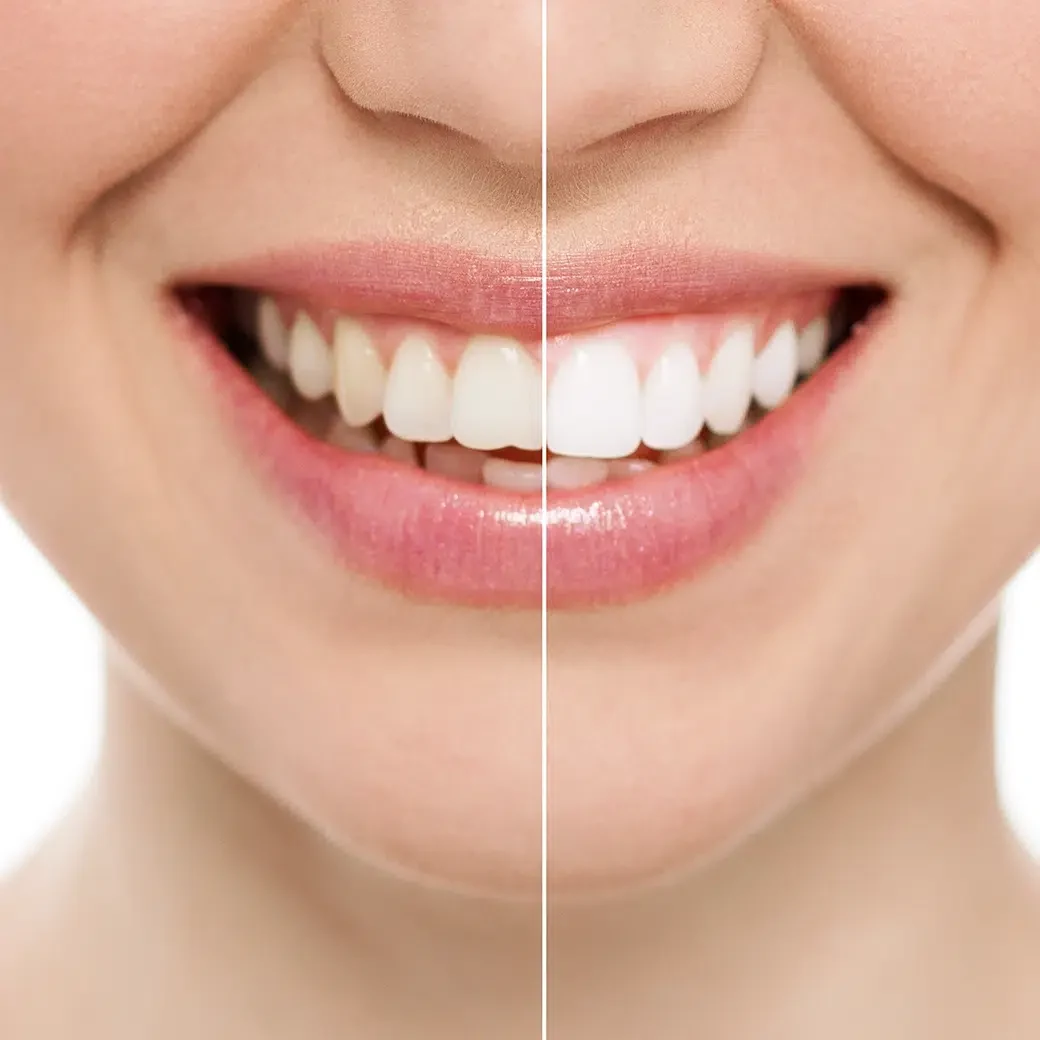
Teeth Whitening
Professional teeth whitening in Bangkok at COSDENT. Flash Whitening Laser — up to 8 shades brighter in 1 minute per tooth. Er:YAG Fotona technology, first in Thailand. Book your consultation today.
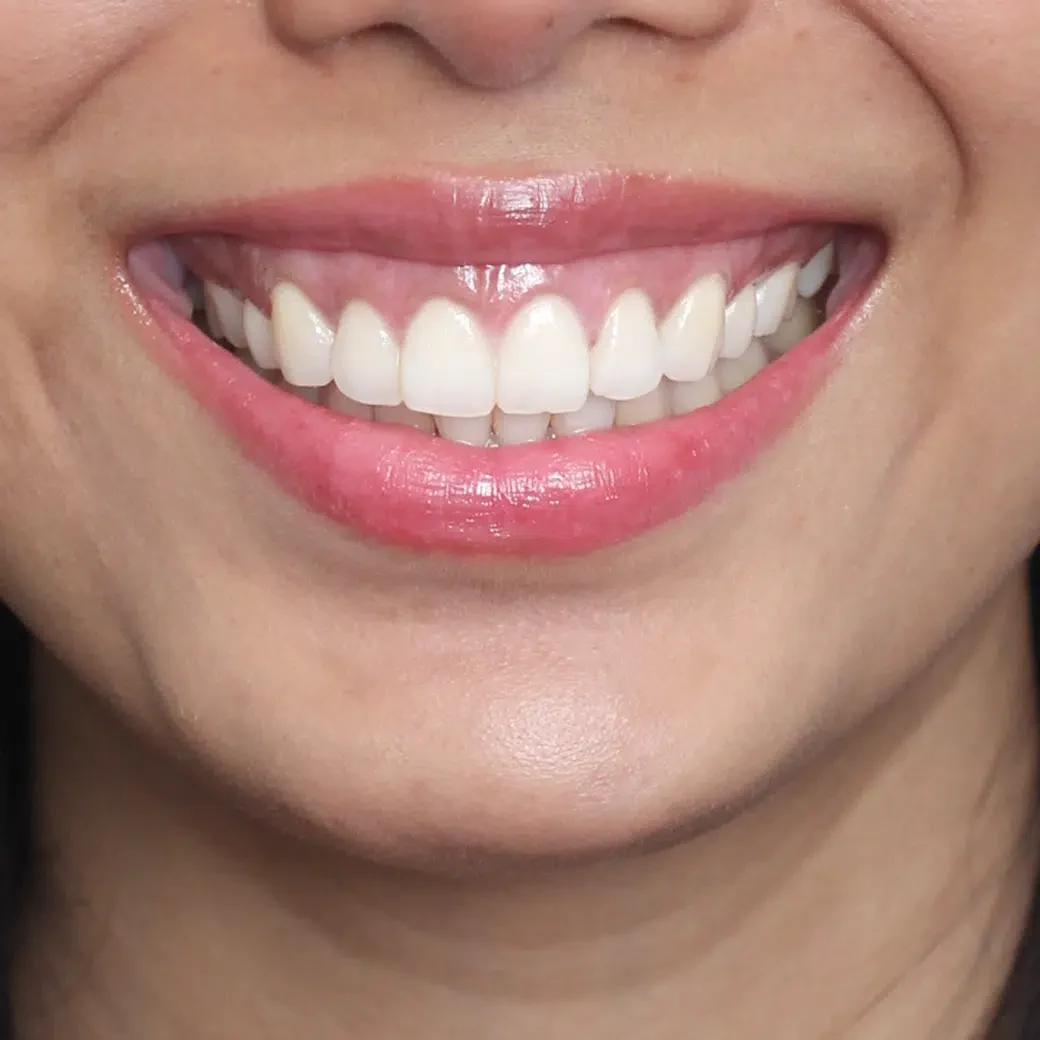
Pink Gum Treatment
Laser treatment to lighten dark gums for a healthy pink appearance.

